
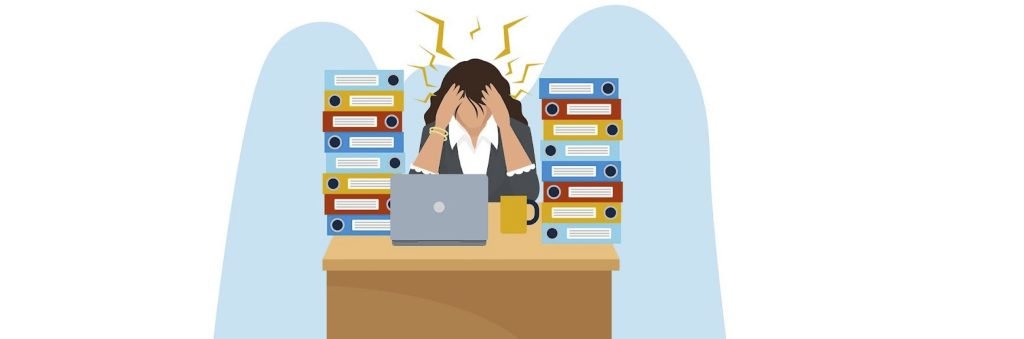
I don’t know about you, but I’m hearing lots of examples in my communities of people’s stress levels being extremely high, including people in the humanitarian and development communities losing their jobs with little to no notice, lifesaving HIV/Aids drugs not being available, and much, much more.
It’s why I’ve been compelled to write a love letter and lifeline for the world.
In this, the final part four post, I’ll let you in on a very special example of caring and compassion that I was honoured to be part of recently.
But first, if you need to catch up, simply go here:
- Part one: A man’s legs broke through our ceiling. That wild moment became the start of a love letter to the world—told through lean-ees and lean-ers.
- Part two: I’ve had to lean, hard. Those moments gave me the gift—and responsibility—of being someone others can lean on.
- Part three: This snowflake shows why that give-and-take matters. It’s what led me to name ten core values we all need.
Now, on with the post..
We shouldn’t have to experience something for it to matter.
But I get it.
For many people, the impacts of the draconian USAID cuts, border tariff threats, and more can seem, well, a world away.
Which is why I wanted to share a very specific example of courage, connection, and compassion at work.
To set the stage, let’s dial back the timeline to 1994, when the genocide was raging in Rwanda.
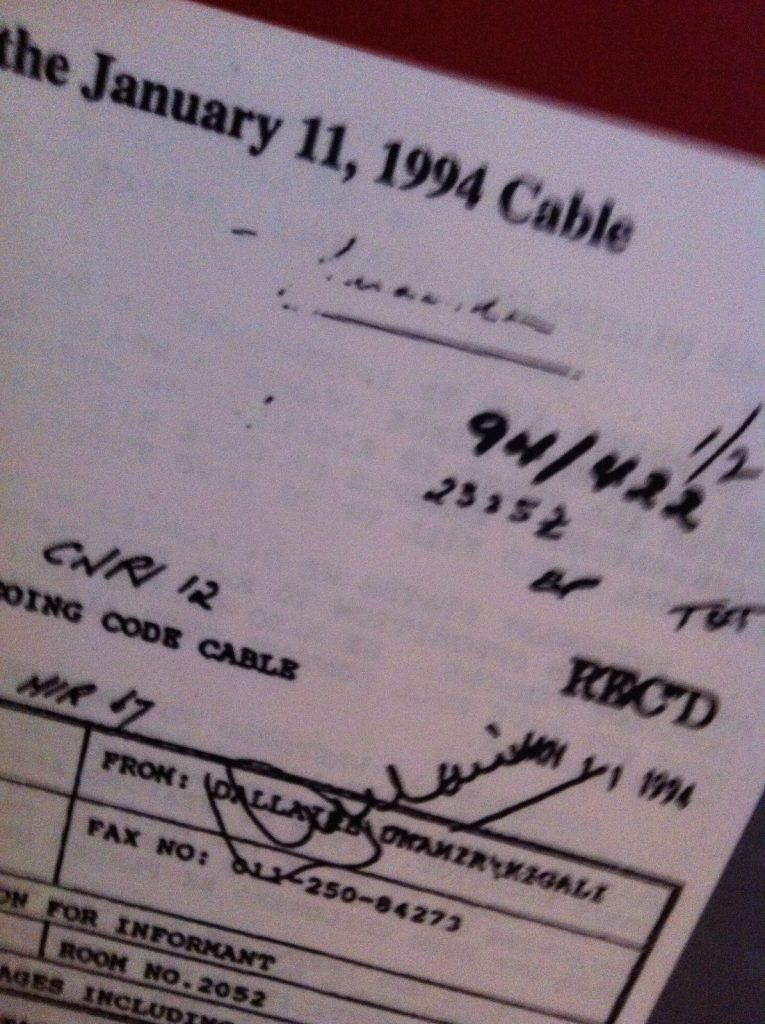
An image taken from the Rwanda Genocide Memorial of Dallair’s orders from the United Nations
Canadian Romeo Dallaire was head of the UN Peacekeeping forces there. He and his troops “witnessed the largest genocide since the Holocaust.”
“Within three bloody months in 1993, more than 800,000 Rwandans were killed. … He defied orders to pull his troops out. Dallaire came back to Canada, shattered by what he witnessed. “There was no victory parade,” he said. (Source: Veterans Canada)
Fast forward to May 2013, when, for various reasons, one of my kiddos had been kicked out of school…. for a year.
What’s a mama to do in a situation like that?
Ask him if he wants to go on a trip.
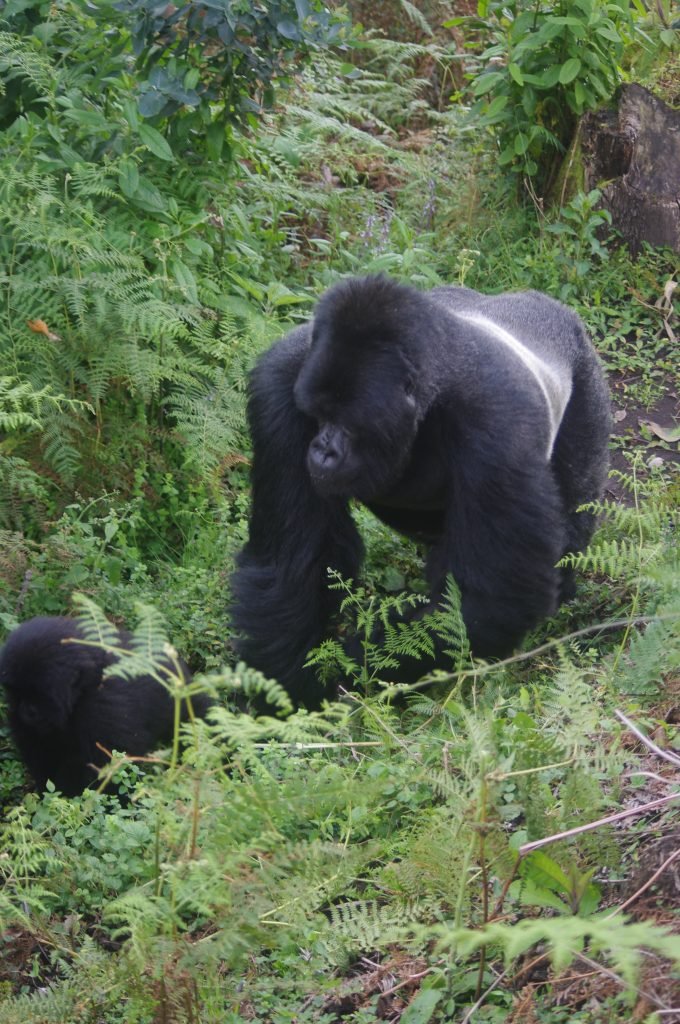
Which is how we end up trekking to see the mountain gorillas of Rwanda and also the Genocide Memorial Museum there
As a Canadian, I felt immense pride showing my kiddo the memorial, especially seeing Romeo Dallaire featured so prominently.
Fast forward from 2013 to just last month, when the Dallaire Institute for Children, Peace and Security invited me to take part in Red Hand Day events and collaborate with their team in Kigali.
Red Hand Day is a multi-stakeholder event to stop the use of child soldiers.
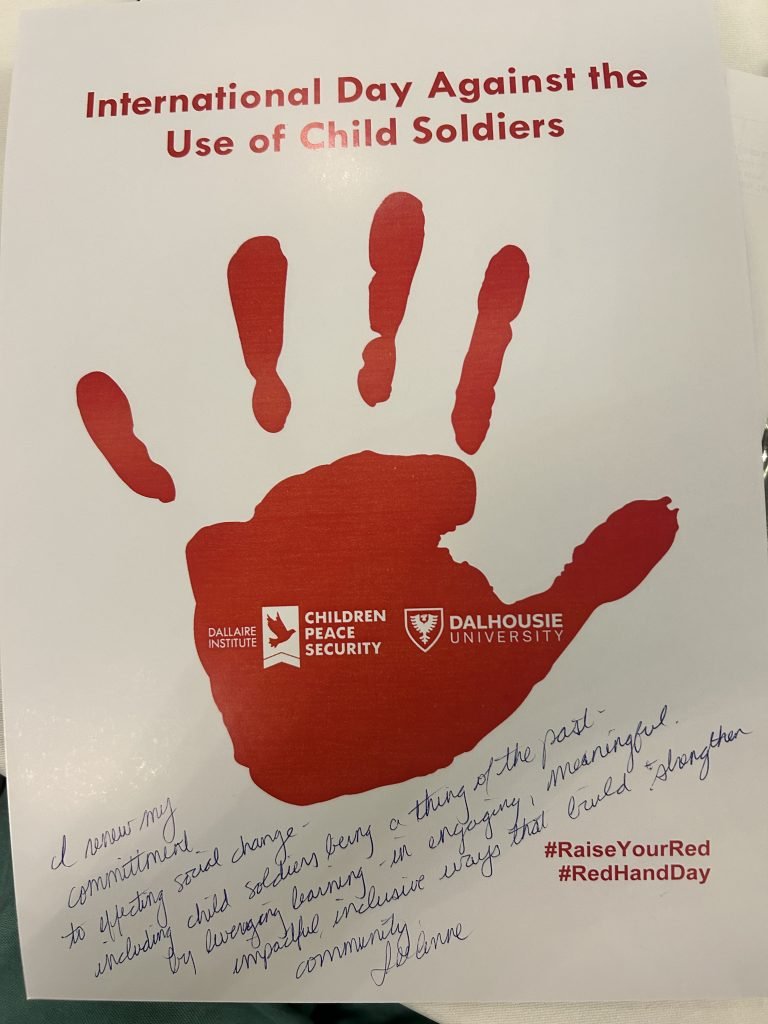
The institute works to prevent the use of child soldiers, as well as child trafficking, forced labour, and child marriage.
Whether you’re a parent or not, whether you live in the global north or the global south, as a human, take your heart in hand and consider these stats:
- “We have data now that confirms that it [the use of child soldiers] prolongs a war by at least three times.”
- “If we can prevent the recruitment of children, we can shorten conflicts and even prevent them from happening in the first place.”
- The United Nations reports that one in six children—that’s 357 million girls and boys—live in areas of the world affected by war or armed conflict.
- Not only are children directly threatened by violence, but they also continue to be highly vulnerable to being recruited into militias, becoming suicide bombers, and even being incorporated into national armies. Source: Child soldiers: a conversation with General Romeo Dallaire
- Over the past 15 years, the number of identified child trafficking victims has tripled
- Migrants, refugees, and internally displaced children are particularly at risk
- Soldiers who come into contact with child soldiers are at risk of moral injury. If that’s a new concept for you, watch this brief, incredible video explaining it by the Dallaire Institute.
Hopefully, your world—and the children in it—are far removed from the threat of becoming child soldiers.
But let that not stop you from cheering for those who do this difficult work. It’s a challenging, difficult, heartbreaking road to walk, annnnnnd it is possible to effect change…..
If we band together.
If we support each other.
If we seek to understand.
If we cultivate caring and compassion, including for those issues that may feel very distant, we can and will effect positive social change.
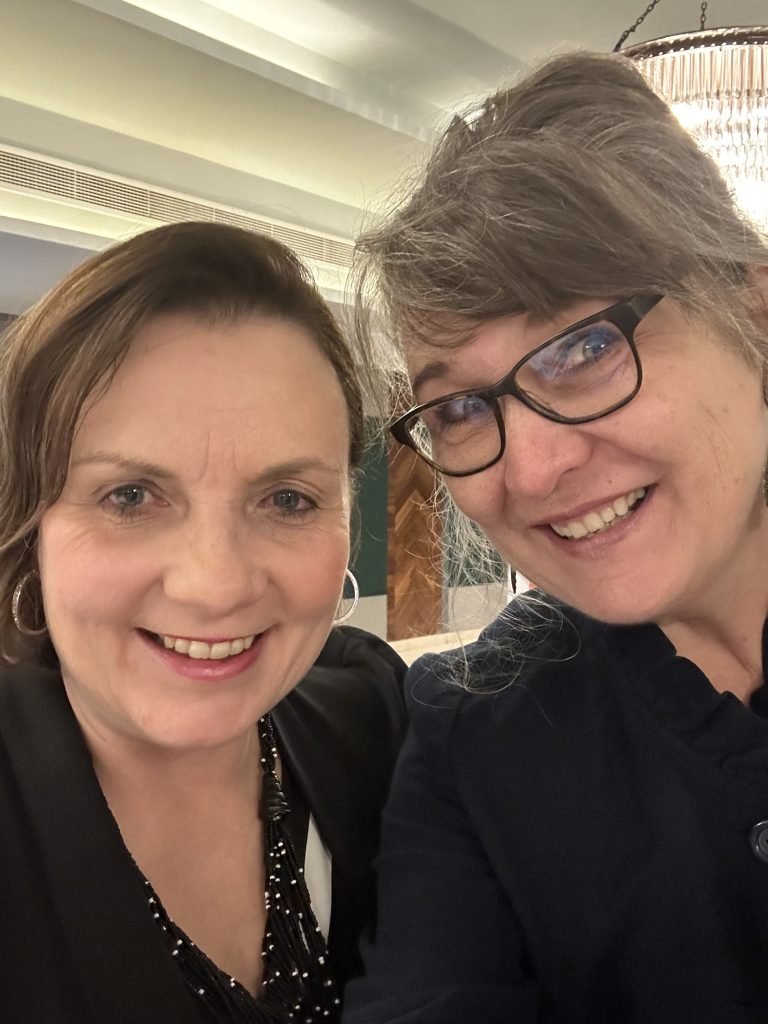
Like the positive social change that Dr. Shelly Whitman, the Executive Director of the Dallaire Institute, and her team so exceptionally work for.
Let’s be courageous, kind, and compassionate, leaning on others and offering support as the case may be.
Because, once again, we shouldn’t have to experience something directly for it to matter to us.
Let’s just do it. Together.
Now go on and learn, laugh, and lead
Learn
- Think about times when you’ve had to lean on others for help, for support, for assistance.
- And think about times when you’ve been able to offer support and assistance to others.
- Watch the moral injury video by the Dallaire Institute
Laugh
- Funny, sweet video of kids answering the question – what makes you an incredible kid?.
Lead
- If you’re in the position to do so, if you have the means and the mental health, take the lead and let others lean on you. Now more than ever, we need to support each other.
- If you need to lean on others, please do so without shame.
P.S.
- Have you registered yet for this month’s Learning and Development Roundtable – How to (actually) increase your resilience, your grit, and your ability to manage change? It’s free, it’s online, and it’s happening April 24th, 5 pm EAT.
P.P.S.
- I’ve tagged this series of blog posts Life Lenses® because, ultimately, it’s all about perspective. If you’d like to enrich your perspective, please take my free Life Lenses® personality assessment.


Leave a Reply