
In my work with trainers and leaders around the world, I’ve noticed a pattern.
The people who actually follow through on their goals aren’t necessarily more talented or more motivated.
They just asked better questions upfront.
What’s missing for both of them isn’t willpower or skill. It’s a framework. Specifically, five questions that — when answered in order and answered honestly — turn a fuzzy intention into a real plan.
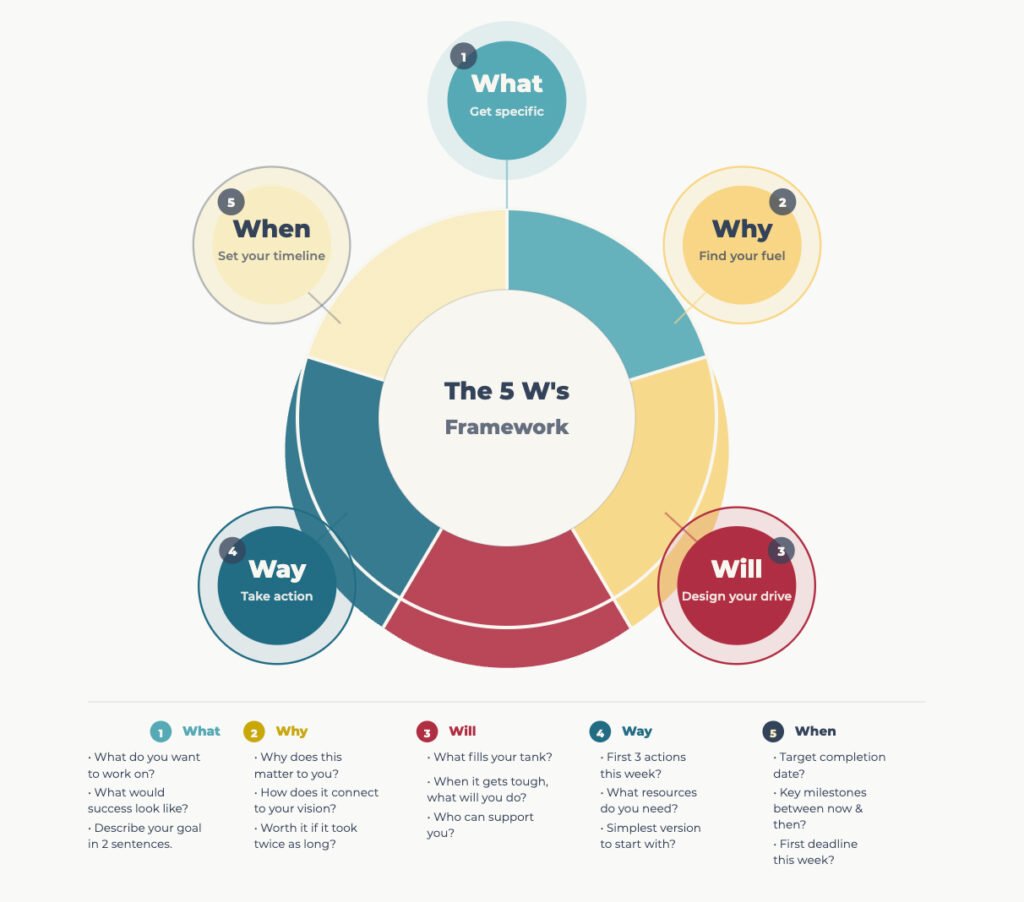
I call it the 5 W’s.
I wrote about the first two – what and why – last week. Check out that post if you haven’t already.
Now that you have your what (where you want to focus, what you want to accomplish) and your why (how it fits into your vision), today we’ll focus on the final three W’s.
W #3: Will
Again, now that you have clarity on what you’re doing and why it matters. Now comes the honest question: what’s actually going to keep you going when the excitement wears off?
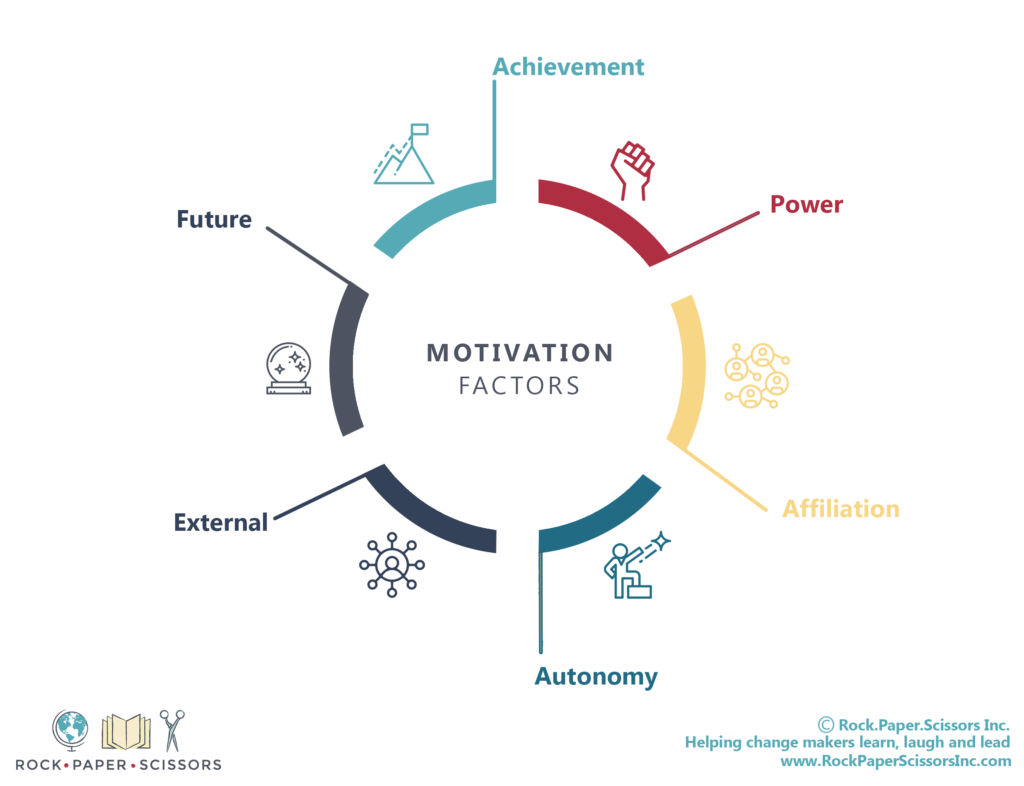
Will isn’t about being a naturally motivated person. It’s about being intentional about your motivation — understanding what fills your tank, what drains it, and what you’ll do when the going gets tough.
This is where so many well-intentioned goals quietly die. Not in a dramatic moment of giving up, but in a slow fade of competing priorities, low energy, and the sneaky voice that says I’ll get to it tomorrow.
Priya knows she’s energized by community — she does her best work when she feels connected to other people on a similar path. That’s useful information.
(Sound familiar? It might be worth checking out the Transformative Trainers Academy — a global community built exactly for people who’ve got expertise they want to deliver and increase their impact.
David knows he’s more likely to protect his evenings when he has a wind-down ritual that feels good rather than just rules that feel restrictive.
What happens when you skip this W: You rely on willpower alone — and willpower is a finite resource. Priya waits to feel inspired, and the weeks slip by. David white-knuckles his way through three good days and then crashes. Will isn’t something you either have or don’t. It’s something you design for.
Therefore, ask yourself:
- What has helped me follow through on goals in the past?
- When the going gets tough, what will I do to reconnect with my motivation? Check out my motivation style quiz to discover your very own answer to this question.
- Who or what can support me when my will wavers?

This is the W most people jump to first — and that’s exactly the problem.
Way is about the specific, concrete actions you’re going to take. The tactics. The steps. The actual things that go in your calendar. But Way only works when it’s built on a foundation of What, Why, and Will. Skip those, and your action plan is just a to-do list with no roots.
When you get to Way at the right moment, something shifts. Instead of brainstorming endless possibilities, you’re making focused decisions. You know what you’re building, why it matters, and what keeps you going — so now you can figure out the smartest path forward.
Priya doesn’t need to do everything at once. Her Way might start with defining her target audience, outlining her core content, and booking three discovery calls with potential participants. David’s Way might be as simple as a phone charging station outside the bedroom, a ten-minute evening walk before he opens his laptop after dinner, and one screen-free morning per week.
What happens when you skip this W: You have beautiful intentions and no traction. Or worse, you have frantic activity with no coherence. Priya signs up for three courses, redesigns her website, and starts a newsletter — all before defining what her program actually is. David tries to overhaul his entire relationship with technology in one weekend. Big energy, short runway.
So ask yourself:
- What are the first three concrete actions I can take this week?
- What resources, tools, or support do I need?
- What’s the simplest possible version of this I could start with?

W #5: When
The last W is where intention becomes commitment.
When is about laying out a realistic timeline — not a wishful one. It’s the difference between “I’ll get to this soon” (which means never) and “I will have this done by the 15th” (which means something).
A timeline does two things. It creates accountability — to yourself and, if you share it, to others. And it forces you to get honest about what’s actually possible given your current workload, energy, and life. A goal without a timeline is just a dream with good intentions.
Priya commits to having her program outline complete by the end of the month, her pilot participants confirmed six weeks from now, and her launch date set for three months out. It’s ambitious but doable. David decides that for the next four weeks, he’ll track one boundary per week — starting with the phone out of the bedroom — before adding anything else. Small, sequential, sustainable.
What happens when you skip this W: Everything stays in “someday” territory. Priya’s program launch gets pushed back indefinitely every time a client project comes in. David’s boundaries reset every Monday with great intentions and dissolve by Wednesday. Without a When, there’s no moment where you actually decide — and deciding is everything.
Therefore, ask yourself:
- What’s my target date for completing this goal?
- What are the key milestones between now and then?
- What’s a realistic first deadline I can commit to this week?
Talent and motivation will only take you so far. The people who follow through aren’t different from you — they just asked better questions. Now you know which ones.
Go get your what, why, will, way, when, and you’ll be set to reach the stars.
Take Action Now – go on and learn, laugh, and lead

Learn
- The 5 W’s aren’t just a goal-setting tool — they’re a diagnostic. If something in your life or work keeps stalling, chances are one of the W’s is missing. Go back and find it.
Laugh
- Imagine how far we can go when we all pull together …. the moon.
Lead
- The next time someone on your team — or in your training room — comes to you with a goal that isn’t moving, don’t jump straight to tactics. Ask them which W they haven’t answered yet. That question alone can change everything.
P.S.
The Learning and Development Roundtable is on a break until September, so not to have you feeling bereft, if you’re a member, you’ll be receiving these weekly tips on how to learn, laugh, and lead until we start up again. (If this is the first you’re hearing of the Learning and Development Roundtable as a newsletter subscriber, find out more here and join us! It’s free, and as a member, you get access to 13+ years of resources.
P.P.S.
One more thing. If you share your expertise through workshops, training, or facilitation and want those sessions to be as good as your knowledge behind them, the Transformative Trainers Academy was made for you. Learn more here.


Leave a Reply