
As Mick Jagger famously said, “Can’t get no satisfaction?” How about some satisficing instead?
But first, a trip back in time.

In 1965, the Rolling Stones were partway through their third tour of the United States.
By then, Mick Jagger had spent enough time in U.S. hotels, U.S. diners, and in front of U.S. televisions to notice something that got under his skin: everywhere he looked, someone was trying to sell him something.
Ads on the radio between songs. Ads on the billboards between towns. Ads promising that this cigarette, this car, this shampoo would finally make him satisfied.
But he knew he couldn’t get any satisfaction, and he said so in one of the biggest songs of all time. (Can’t you just hear that backbeat in your head?!)
I think about that song a lot, not because I’m particularly bothered by shampoo commercials, but because most of us are running our own quieter version of Jagger’s frustration every single day.
We are convinced that somewhere out there is the perfect answer, the perfect option, the perfect version of “the thing,” if only we look a little harder, work a little harder, etc.
So we keep looking. And looking. And we never quite arrive at satisfied.
Meanwhile, as our search for satisfaction continues, we get more and more tired, overwhelmed, and frustrated.

Enter satisficing and the trap that prevents you from getting there
There’s a word for the trap, and once you learn it, you’ll start seeing it everywhere.
Psychologist and Nobel laureate Herbert Simon coined the term “satisficing,” a blend of “satisfy” and “suffice.”
Neuroscientist Daniel Levitin writes about it in his book The Organized Mind: instead of hunting for the single best option out of a sea of choices (that’s called maximizing, and it’s the trap), you decide in advance what “good enough” looks like, and the moment an option meets that bar, you stop looking, stop overthinking, and move on with your life.
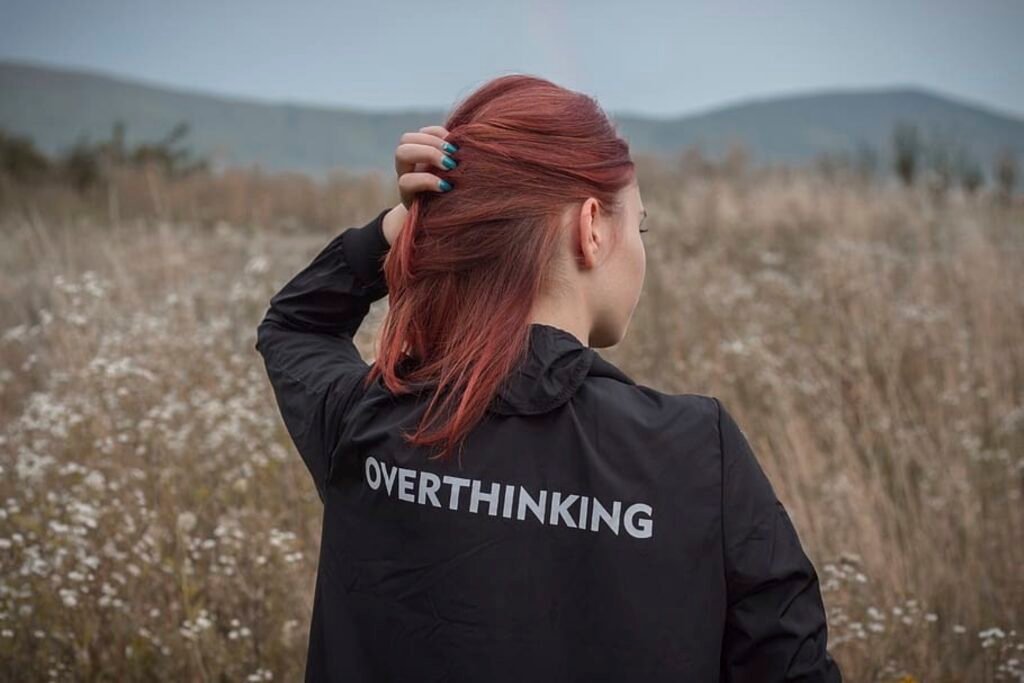
Here’s an example of the difference between maximizing/overthinking and satisfycing/good enough:
- Maximizers keep the sales receipt in case a better deal turns up.
- Satisficers buy the thing that works and go live their life.
Research on decision making consistently finds satisficers report more happiness and less regret than maximizers, even when a maximizer’s final choice is objectively “better” on paper.
Chasing the best option has a cost that never shows up on the price tag: your time, your energy, and your peace of mind.
BTW, this isn’t permission to settle for sloppy work. It’s the opposite. It’s protecting your best thinking and energy for the decisions that actually deserve it, instead of spending it all on minutiae.

Signs you might be overthinking it
Not sure if you’re maximizing when you don’t need to be? Here are a few tells.
- You’ve reopened the same document, email, or decision more than three times without adding anything new.
- You’re seeking one more opinion, one more article, one more comparison, even though you already have enough information to fill a virtual vault.
- The stakes of the decision are genuinely low, but your stress level about it is genuinely high.
- You keep the “almost chosen” options open just in case, instead of closing the door and moving forward.
- You’d be a little embarrassed if someone timed how long this decision actually took you.
Sound familiar? You’re in good company. Now let’s fix it.
How to satisfice on purpose
- Name your “good enough” line before you start. Two or three criteria, no more.
- Set a real limit. A timer, a maximum of three options, one round of feedback. Choose the limit before you start browsing, not after you’ve already fallen down the rabbit hole.
- Take the first option that clears your bar, and stop shopping. Not the tenth. Not the “just one more look” option. The first one that checks your boxes.
- Bank what you saved. That time and mental energy don’t vanish, it goes toward the conversation, the project, or the person who actually needs your full attention today.
Try it this week on something small: what you wear, what you order, the subject line on one email or your next piece of research. Notice how it feels to just ….. stop.
Your turn
I’d love to know: what’s your version of maximizing/overthinking, the thing you over-polish when nobody’s asking you to?
If the idea of protecting your energy for what matters most is landing for you, you’ll find a lot more like it over in the Learning and Development posts, practical tools, and fresh thinking for your own growth, because you deserve the same attention you give everyone else.
Here’s to good enough! Turns out the Stones were onto something, and so was Herbert Simon.

Learn
- How to satisfice on purpose: Name your “good enough” line before you start, set a real limit, take the first option that clears your bar, stop shopping, and then bank what you saved.
Laugh
- Talk about satisfaction, Rolling Stone, Mick Jagger sings in a Karaoke Bar in a Comedy Skit on SNL.
Lead
- Lean into learning more by becoming a Learning and Development Roundtable member, my monthly online free workshops where you’ll join a thousand-plus members worldwide for practical tools, honest conversation, and the kind of learning that actually sticks.
P.S.
- Want more tools like this one, delivered directly to your inbox weekly? Sign up here. Welcome!
Since 2009, I’ve been writing weekly posts across five topics. Click into whichever one makes you lean forward just now … you’ll find everything I’ve written on that topic waiting for you there.
- Working Better Together – communication, conflict, creativity, collaboration, change. The so-called soft skills that turn out to be the hardest ones.
- Learning and Development – practical tools and fresh thinking for your own growth … because you deserve the same attention you give everyone else.
- Training of Trainers – if you’ve ever been asked to teach, train, or share your expertise with a group, this one’s for you.
- Tech Tools – not the scary kind, I promise. The kind that saves time, cuts overwhelm, and makes you look and feel like a rockstar.
- Life Lenses® – because the lens you look through changes everything. Posts on perspective, perception, and the Life Lenses® framework for understanding why we all see things so differently.


Leave a Reply