
Last week, I wrote about how a guy’s legs coming through our home ceiling set the context for a love letter and lifeline for the world by way of lean-ees and lean-ers.
‘cause sometimes we need to be the lean-er and lean on people. And sometimes we need to be the lean-ee and encourage others to lean on us.
In this post, I share examples of when I’ve had to lean and lean hard and the privilege that affords me to be a lean-ee.
We’ve gotten to a place where the only popular position is rugged individualism – to always be able to stand on one’s own two feet and never, ever have to lean.
We judge those who are in a position of having to lean. And how. The levels of cruelty are simply surreal.
So today I write about how I came to love ‘other’ and why that’s important. A.k.a. balancing those times I can be a lean-ee and a lean-er.
(In my next post, I’ll write about why it’s great being a snowflake, and what I believe are key, core human values, why we need to care, to have compassion, and empathy for everyone, including those who have to lean hard.)
There’s a time to lean and a time to be leaned on. It was my time to learn and to lean.
I’ve had other opportunities in my life to be both a ‘lean-er’ (leaning on others for support) and a ‘lean-ee’ (offering support).
This concept of “lean-er” and “lean-ee” is so very, very important right now.
On needing to lean
Over my almost 60 years on the planet, in addition to the legs-through-ceiling event from my last post, I’ve experienced some serious challenges when I’ve had to lean and lean heavily. A sampling of these times include:
- I survived a serious case of PTSD triggered by gender-based sexual violence
- I survived septicemia, a life-threatening illness that could have easily killed me
- And I survived a sudden cardiac arrest, which did kill me for 3 ½ minutes
Each of these times, when I literally couldn’t walk and had to lean so heavily, I was able to survive and eventually thrive because of a strong safety net, including my partner, friends, doctors, hospitals, counselors, etc.
I’m forever grateful for the healthcare workers who have supported me throughout my life, allowing me to lean on them—including the cardiologist who saved my life and got my heart beating again.

On being the lean-ee, able to offer support and allow others to lean on me
At the same time, I have privilege. Lots of it.
- I have a golden ticket, aka a Canadian passport that can get me pretty much anywhere in the world I want to go
- I have never had to worry about where my next meal was coming from or whether I’d have a bed to sleep in or a roof over my head
- I have two university degrees
- I have a solid, safe relationship of close to forty years
- I have healthy kids who are contributing to the world (one through art and one through conservation)
- I’m English-speaking, so no matter where I am, I can almost always find someone who speaks my language
- I’ve traveled to more than 50 countries
- I am able-bodied, hetero-normative, Northern born
This privilege gives me opportunities to offer support and encourage others to lean on me.
Not in a patronizing, top-down, I’m-better-than-you manner but rather, simply, human to human.
Given the state of the world where leaning is seen as something to ridicule and deride, we need to give our heads and hearts a shake.
We need to find our compassion once again for those people who need to lean so hard and heavily right now, including but certainly not limited to:
- Those who’ve been afflicted with HIV and Aids
- People in conflict countries
- Child soldiers, children forced into labour, and child marriage
- Refugees
- People living in informal settlements, a.k.a. slums
- Those who don’t have access to basic amenities such as clean water, sanitation, education, etc.
In my first post, I mentioned being surprised about feeling the need to share why I think it’s critical that we care for our fellow humans.
I do know though that the notion of leaning, of supporting others, often the most vulnerable, has been tragically undercut, undermined, and undervalued.
In terms of the callousness, the cruelty, the lack of transparency, the threats to sovereignty and democracy, and more, I don’t quite know how we got to this point, but perhaps sharing my perspective as a non-resident Canadian (e.g., a Canadian living overseas) will help in some small way.
Important caveat: I don’t have all the answers and I’m just as mixed up, confused, hurt, and incredulous as many people in my communities. My thought was to put pen to paper, fingers to keyboard, to try and sort out the blender brain I’m feeling right now.
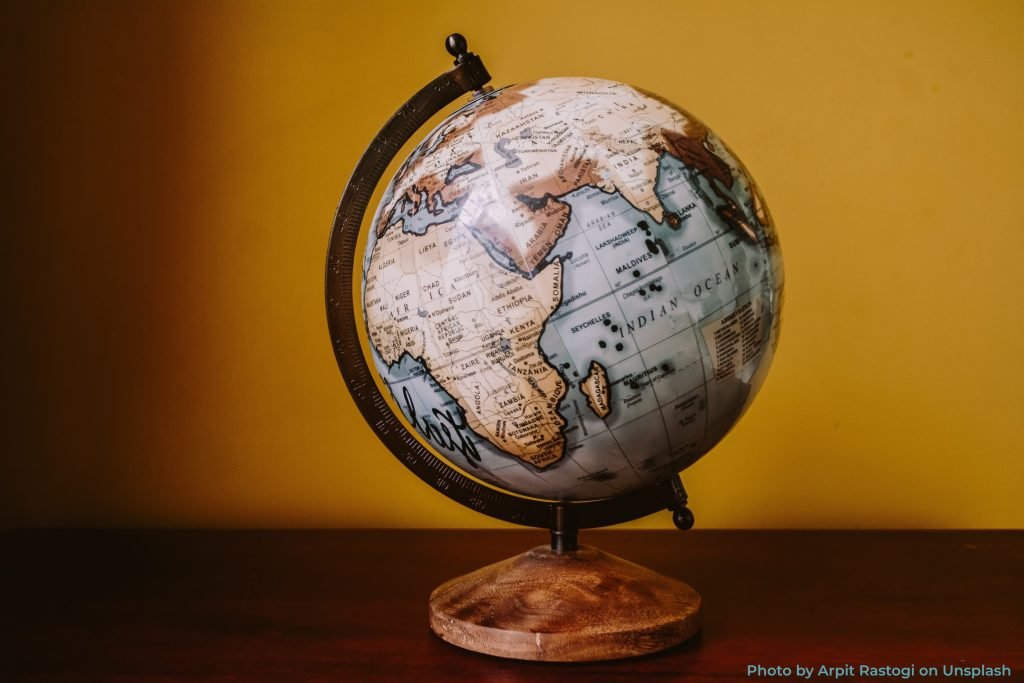
My interest in ‘other,’ in the big, wide world, kicked off with a few key life events:
- As a child, my best friend was Hungarian/German and I remember being fascinated with ‘other’ – the different foods I ate when at her house, the different art on the wall, the ‘accents’ of her parents etc.
- As a teenager in the YMCA International Leaders program, I got a taste of learning about the world beyond the tip of my nose by studying international issues and going on exchanges.
- I lived on a ship that sailed around the world (literally) while going to University, which thoroughly opened my eyes.
- In my early career, I worked with partners around the world on issues of gender, peace, human rights, and more. I led exchanges to places like the Arctic, Japan, etc.
- In 2013, along with my partner and our two young kiddos, we took a huge leap and, with only a few personal belongings, moved to Africa…. for a year. Thirteen years later, I’m still here.
Which brings us to today.
The cruelty that’s commonly and casually dished out and even celebrated is stunning in its prevalence.
Missing information, disinformation, and lies are flourishing.
It’s causing chaos and turbulence.
I’ve never seen anything like this before in my life. Nothing even close.
Regarding the demolishing of USAID (the budget of which is a mere 1% of the US total budget), “nearly 90% of USAID respondents said they are either “completely” or “very” certain that the freeze will lead to significant loss of life, particularly due to its impact on vital food security and global health programs.” Source: DevEx
For me personally, it’s affecting my sleep and my mental health. My stress levels and anxiety are up as I try to deal with the massive ambiguity facing the world.
I feel for you as I suspect you’re in the same boat.
And I feel for the world—the ‘others’ who are suffering, especially as they lose the programs and supports they once relied on.
Now go on and learn, laugh, and lead
Learn
- Think about times when you’ve had to lean on others for help, for support, for assistance.
- And think about times when you’ve been able to offer support and assistance to others.
- Check out some of the resources I’ve bookmarked about the effects of the USAID cuts.
Laugh
- There are different times to lean in … and sometimes fall.
Lead
- If you’re in the place to do so, if you have the means and the mental health, take the lead and let others lean on you. Now, more than ever, we need to support each other.
- If you need to lean on others, please do so without shame.


Leave a Reply