

I get it. You’re simply relieved that all the staff that went to your global team building retreat returned, that Abdullah didn’t fight too much with Andy and you managed to not have anyone break out in hives or have any other kind of allergic reaction, given all the food preferences your team has.
The feedback is in and folks are pretty happy. All went well.
Pat yourself on the back.
Annnnd the work may just be beginning.
Most folks I see put scant attention into trying to get the ‘learning to leave the room,’ in other words getting folks to do something with the retreat learning once they’re back in the office.
I get it.
Coaxing and cajoling your team to apply what they learned during your retreat can be exhausting and not very effective.
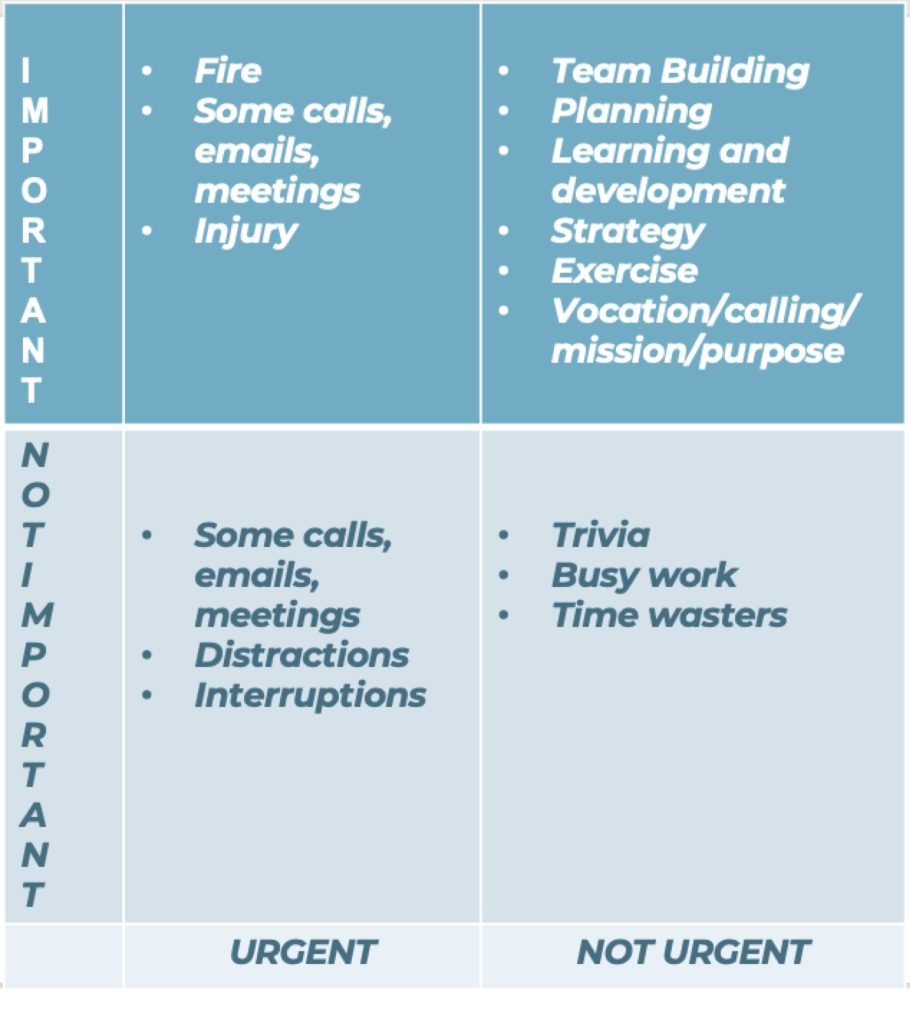
It takes effort and planning to be proactive and work in the ‘important but not urgent’ quadrant …. which applying retreat learning definitely falls into.
Given the significant benefits of training and teambuilding though, including more engaged, healthier, motivated, knowledgeable staff that work together better, a retreat should not be considered a ‘one and done’ but rather something that is ongoing.
But, like I said, despite the importance of team building and training, most people focus almost solely on the team building event itself.
If we consider a retreat in three parts, 1) planning, 2) the actual retreat, and 3) the follow-up or implementation, the approximate emphasis placed on each segment can be seen below.
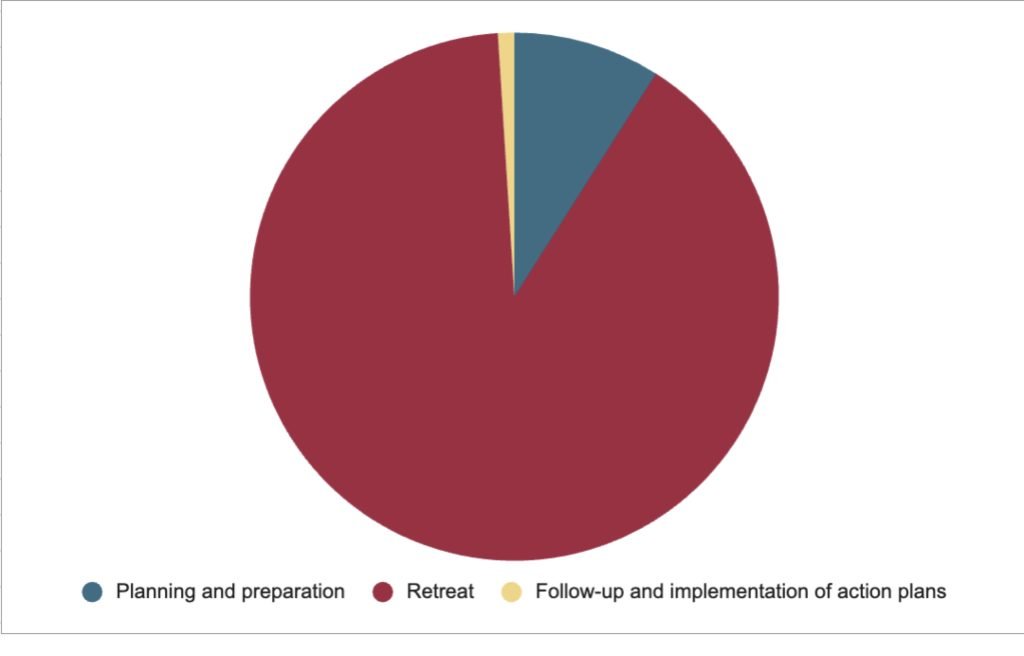
So little time, if any, is usually spent on making sure the learning leaves the room and gets used when back in the office.
The lack of emphasis on follow-up and implementation results in lost opportunities for putting the team’s learning into action.
However, have no fear.
There are lots of opportunities to leverage the learning to achieve real and lasting impact by including a focus on the follow-up.

Here are ten ways to help make sure the learning leaves the room:
Given that applying learning falls into the proactive (not urgent but important) quadrant mentioned above, we should not assume staff can do this on their own; instead, they need support.
The support strategy can take several forms. Select the one that is most appropriate for your team and their time. Here are ten examples.
- Includes ways to help staff remember what they’ve learned. This can be as simple as using a tool like my H.A.R.P. sheet (link below).
- Includes ways to help staff easily find, and share the retreat resources. I always make a one-stop learning resource portal for clients with links to all the resources, such as the PowerPoint decks, worksheets, videos, activities, background information etc.
- Encourage team members to follow-up with a partner assigned during the retreat. Set a specific deadline for that to happen. Encourage them to dive back into the H.A.R.P. sheet (point 1) and/or the learning resource portal (point 2).
- Invest in the learning that occurred during the retreat and equally, invest in a strategy that will leverage the learning. I encourage clients to create a learning plan that syncs with the team and organizational objectives. Every year I give a free workshop in my Learning and Development Roundtable on how to do just that (link below).
- Create an after-retreat implementation plan that will build on the work and support staff in applying their learning.
- Focus on enhancing the learning culture so learning is prioritized and enhanced, which benefits the individual, the team, and the organization. Learning plans (point four) help with this.
- Implement weekly ten-minute learning activities from the retreat that assist staff in applying their learning for 3, 6, or 12 months.
- Hold online and/or in person sessions with the group and facilitator and/or the team leadership and the facilitator to encourage application of the action plans and to support staff in their continued learning.
- Host monthly learning activities for 3, 6, or 12 months that encourage a learning culture and application of learning.
- Spread the love. Implement a training of trainers program; train selected staff in how to create and support a learning culture
There you go. Ten tips to help you get the learning to leave the room post-retreat.
Keep in mind that application of learning is at least as important as the learning itself and you’re more than halfway there.
Which of the ten do you think fits your team the best? Do you have any to add?
Try them out. Have fun. And keep on keeping on with your and your team’s learning.
Now go on and learn, laugh, and lead
Learn
- Need a way to help your team remember what they learn at a retreat (or any workshop)? Check out my H.A.R.P. worksheet which is editable once downloaded.
- A sample Learning Plan workshop can be found here “Design a customized learning plan that fits you and your team to a T and increases your ROI.” Contact me if you’d like to learn more about having me deliver this for you and your team.
Laugh
- Learning doesn’t just happen automatically and applying it definitely takes work. It doesn’t just jump into your lap, er, mouth, like this baby bird is expecting.
Lead
- Contact me if you’d like to chat about a teambuilding session for your team. I’m here to help with my customized team diagnostic tool that results in highly customized team buildings.


Leave a Reply