
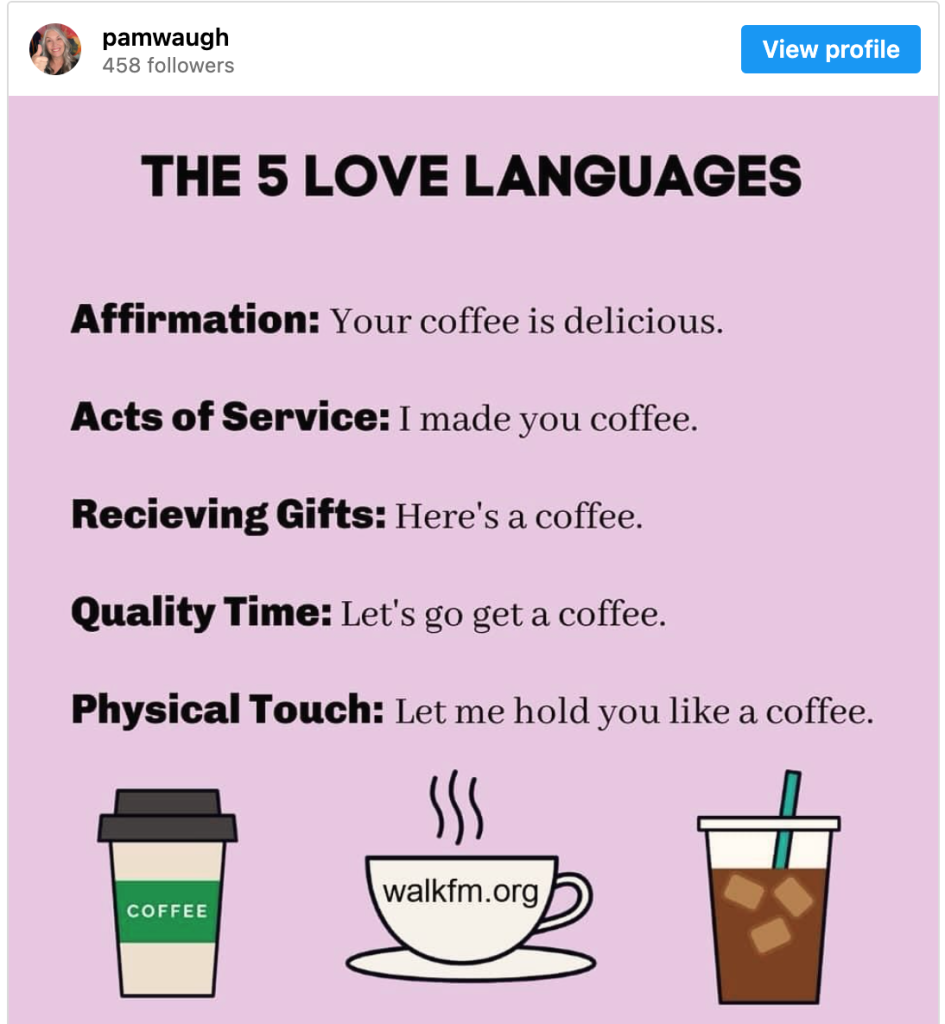
I’m guessing you’ve heard of Gary Chapman’s popular love languages:
- Affirmation
- Acts of service
- Receiving gifts
- Quality time
- Physical touch
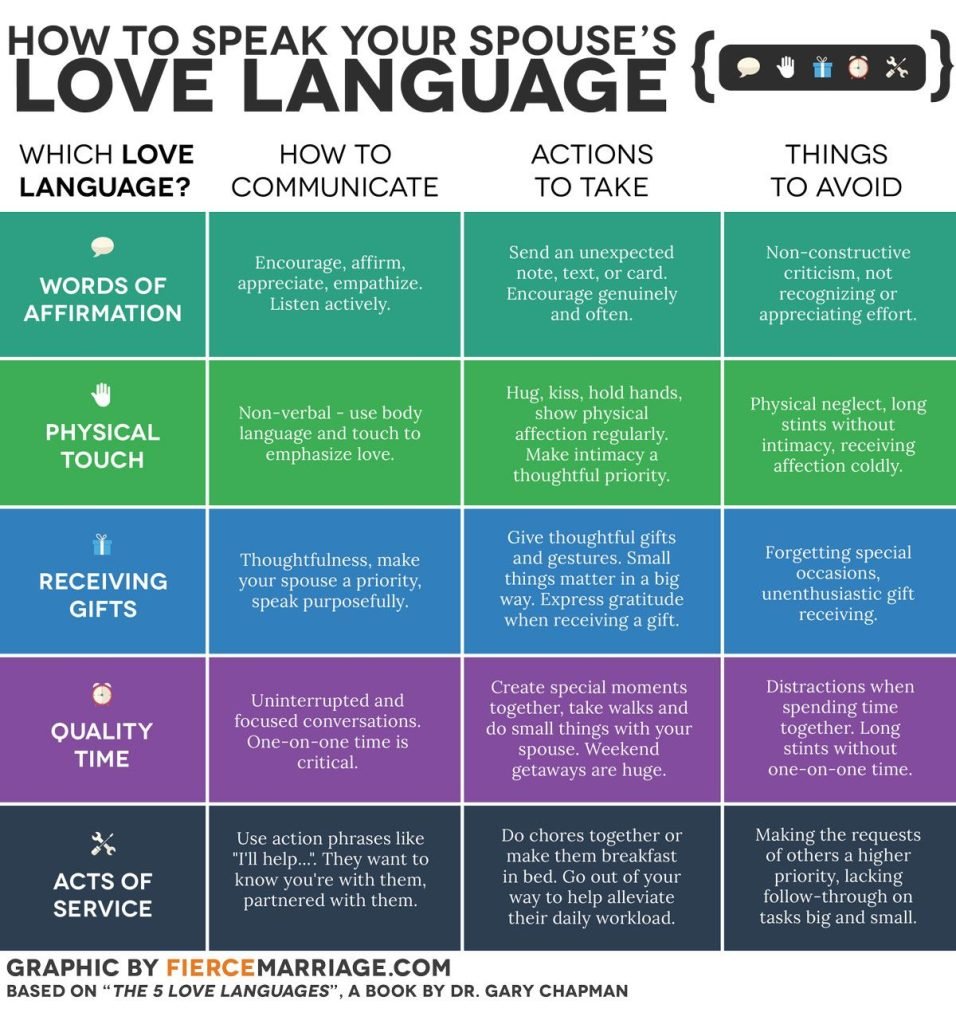
They can be summed up by the above chart.
While some research shows they may not hold, I believe they’re a helpful framework for communicating, resolving conflict, collaborating, and even giving/receiving feedback (see the “Lead” resource below for more on that).

But wait, there’s more!
Research from eHarmony (don’t judge) found that some folks just didn’t fit into the five categories.
So two more love languages have been added.
- Shared Experience – adventuring and growing together with someone (you could see this as a specific form of quality time).
- Emotional Security – feeling emotionally seen and taken care of. (I find this one really interesting, as wouldn’t all of the others produce this? Apparently not, as the separate category was added). Source: Upworthy

What do you think? Do the new love languages speak to you?
Can you use them with your colleagues?
It makes me think of Daniel Pink’s research into our basic psychological needs of mastery, autonomy, and purpose (M.A.P.).
With a little M.A.P. and some love languages, we can all feel included, seen, and valued.
Now go on and learn, laugh, and lead

Learn
Laugh
- When all the love languages go sideways.
Lead
- I’ve created a survey about how you prefer to receive feedback based on the love languages. Check it out. What’s your (and your team’s) love language when it comes to giving feedback? Here’s how to find out and why it matters.


Leave a Reply