
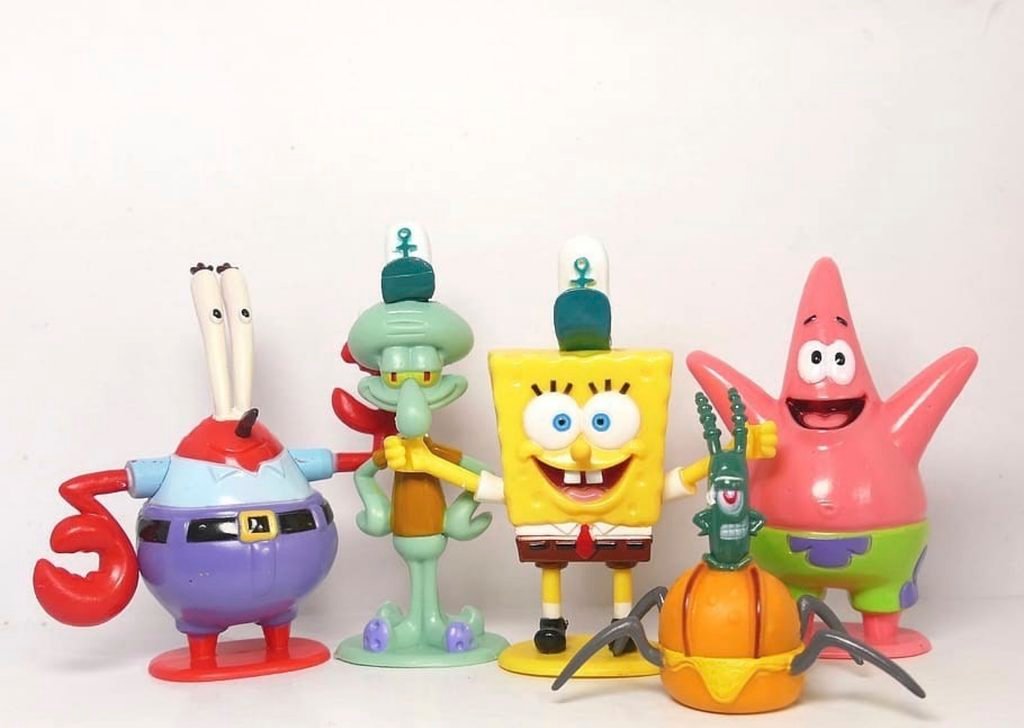
I don’t have to work hard to remember the giggles and rapt attention of my kiddos when they were wee ones, glued to SpongeBob SquarePants cartoon.
Not part of your cultural milieu? Quick primer: SpongeBob is a hyper-enthusiastic, endlessly chatty sea sponge who lives in a pineapple under the sea and makes flipping burgers sound like the greatest calling on earth.
Yep, tis true. (Can you imagine being part of the meeting to pitch that?!)
Which is why I was so surprised recently, while spending a couple of months in Turkey, to hear the barista talking about SpongeBob SquarePants.
Huh?
I was in a relatively remote area with very little English spoken.
Let’s just say my Google Translate was getting a frequent workout.
I’ll give you three guesses to figure out what was going on.
- The barista was talking about his moonlighting experience as a cartoon voice actor.
- SpongeBob had quietly conquered rural Turkey the way he’d conquered my living room.
- After weeks of immersion, I’d finally cracked Turkish by osmosis.
Answer?
None of the above.
Stick with me here, because by the time you finish this post, you’ll have a simple two-question check you can run the next time your own brain hands you a “fact” about someone, a fact it actually just made up.
Here’s what was really going on.

My brain, faced with a language it didn’t understand, went looking for something familiar to hang the sound on.
Some rhythm, some string of syllables in that barista’s Turkish came close enough to “SpongeBob SquarePants” that my brain, rather than sit in the discomfort of not knowing, just declared a winner.
Confidently. Instantly. Wrongly.
Turns out there’s a name for this. Researchers call the visual version pareidolia, the thing that makes you see a face in a cloud or a wall socket.
The auditory version does the same job with sound, taking ambiguous noise and forcing it into a shape you already recognize.
Your brain isn’t malfunctioning when this happens. It’s doing exactly what it’s built to do: make sense of the world as fast as possible, with whatever raw material is on hand.

Here’s the part that stopped me in my tracks, laughing at myself in a Turkish cafe. This is not a Turkey problem. This is not a foreign language problem.
This is a Tuesday-at-the-office problem.
Your brain does this constantly, with people, not just phrases. A colleague sends a two-word email reply, and your brain instantly writes the backstory: they’re annoyed with you.
A client goes quiet after a proposal, and your brain fills in the ending: they’ve gone with someone else.
A new team member sits quietly in a meeting, and your brain assigns the label: disengaged, not interested.
None of that is fact. It’s your brain doing the SpongeBob thing, reaching for the nearest familiar pattern because ambiguity is uncomfortable and a confident guess feels so much better than an open question.
Sense-making, this business of stitching meaning out of incomplete information, is genuinely one of your brain’s best tricks.
Without it, you’d be paralyzed by every unfamiliar accent, every ambiguous glance, every unanswered text. You need it to function.
The trouble starts when sense-making stops feeling like a guess and starts feeling like a conclusion. That’s the moment a hunch about one curt email hardens into “they’re difficult to work with.”
That’s the moment a quiet meeting turns into a permanent label on someone’s file.
Helpful sense-making stays curious.
Harmful sense-making gets rock hard certain.

So here’s your two-question check, the one I now run on myself before I let a guess calcify into a grudge:
- What did I just decide is a fact that I don’t actually know?
- Name the guess out loud, even just in your own head. “I’ve decided she’s upset with me” sounds a lot shakier than the silent assumption ever did.
- What else could this mean?
- Force yourself to generate one other explanation, even an unlikely one.
- Maybe your colleague was slammed and typed fast.
- Maybe your client is deep in a process that has nothing to do with you.
- Maybe your quiet new hire processes out loud a lot less than you do.
- Or maybe your ‘fact’ is actually a fact, but you can pat yourself on the back now that you’ve done some due diligence.
You don’t have to land on the “right” answer. You just have to loosen your grip on the one your brain handed you for free, the way mine handed me a cartoon sea sponge in the middle of Turkey.
If this got you curious about the patterns your own brain defaults to, the lenses it reaches for before you’ve even noticed you’re wearing them, that’s exactly what my Life Lenses® assessment is built to show you.
It’s a quick, revealing look at the assumptions and biases you carry into every conversation, and what to do once you can actually see them. Take the Life Lenses® assessment here. You might just catch your own SpongeBob moment before it costs you a relationship, a client, or a Tuesday afternoon.
Take Action Now – go on and learn, laugh, and lead

Learn
Laugh
- Adding turkey to the Turkish SpongeBob.
Lead
- Take the Life Lenses® assessment here. Again, you might just catch your own SpongeBob moment before it costs you a relationship, a client, or a Tuesday afternoon.
P.S.
- Want more tools like this one, delivered directly to your inbox weekly? Sign up here. Welcome!
P.P.S.
- I just posted the resources from this month’s Transformative Trainers Academy Master Class on how to organize all those lovely learning resources of yours. Easy peasy. Sound intriguing? Consider joining our global community for change makers who want to learn how to design and deliver game-changing workshops.
***********************
Since 2009, I’ve been writing weekly posts across five topics. Click into whichever one makes you lean forward just now … you’ll find everything I’ve written on that topic waiting for you there.
- Working Better Together – communication, conflict, creativity, collaboration, change. The so-called soft skills that turn out to be the hardest ones.
- Learning and Development – practical tools and fresh thinking for your own growth … because you deserve the same attention you give everyone else.
- Training of Trainers – if you’ve ever been asked to teach, train, or share your expertise with a group, this one’s for you.
- Tech Tools – not the scary kind, I promise. The kind that saves time, cuts overwhelm, and makes you look and feel like a rockstar.
- Life Lenses® – because the lens you look through changes everything. Posts on perspective, perception, and the Life Lenses® framework for understanding why we all see things so differently.


Leave a Reply