
Why Most Workplace Feedback Falls Flat

Do you remember the telephone game you likely played as a child?
Someone whispers a message at one end of the line, and by the time it travels through ten people and reaches the other end, “the cat sat on the mat” has somehow become “the bat ate a rat.”
Everyone laughs.
The message is unrecognizable. And yet nobody in the middle of the chain thought they were distorting anything. They were just passing along what they heard.
Feedback works the same way.
You craft it carefully. You think about your words. You deliver it with good intentions.
And then… nothing.
No change. No acknowledgment. No sign it landed at all.
The message left you perfectly intact.

But somewhere between your mouth and their ears, it became unrecognizable.
Here’s what the data says about how often this is happening.
When I do customized training for clients, I always start with surveying the team.
One of the things I ask about is how much people give feedback and how much they receive feedback.
In my survey of over 500 professionals from all over the globe, what percentage of folks do you think say they give others recognition for their work?
And what percentage of folks say they receive recognition for their work?
Does it surprise you to hear that 67% said they give others recognition for their work? But only 35% said they receive it? That’s nearly double.
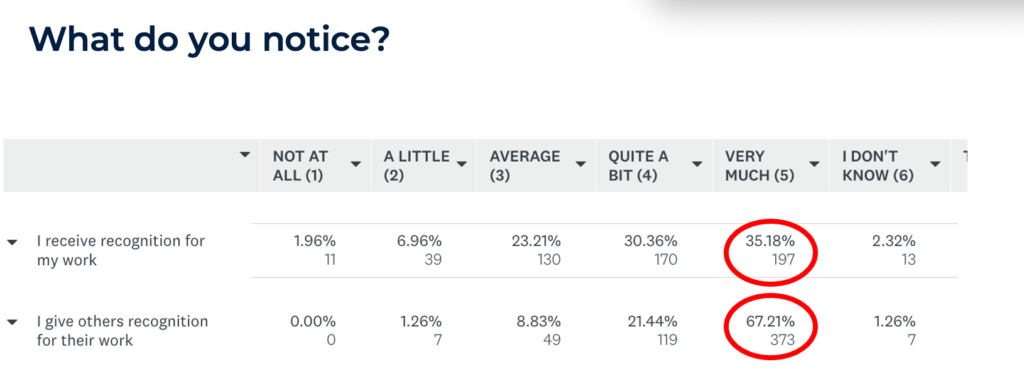
Note: This is the collated data for all survey respondents. When I’m working with individual teams, I break out their respective data.. The biggest difference I’ve seen for a specific client, between giving and receiving recognition, was a wait for it ….. 500% difference! The amount of recognition folks felt they were giving was 5x more than what they were receiving!
What does this mean?
It’s simple.
An enormous amount of feedback is being sent out into the world and simply… disappearing.
Poof! Gone.
Not because people aren’t trying. But because we’ve spent so much time learning how to give feedback, we’ve almost entirely ignored the other half of the equation: how to receive it.
And that is where the TRI model comes in.
Adapted from the book Thanks for the Feedback by Douglas Stone and Sheila Heen, the TRI model identifies three triggers that block us from receiving feedback, even when it’s being given well.
Think of each trigger as a point along the telephone chain where the message gets dropped.
T is for Truth
The first trigger is whether we believe the feedback is true.
This sounds straightforward, but it’s far more complicated in practice. Our perception of whether something is true is deeply subjective, and it’s heavily influenced by our emotional state in the moment. You might receive feedback that is genuinely accurate and valuable, but if something about it triggers a defensive reaction, your brain will work very hard to find reasons to dismiss it.
The tricky part? The more charged the topic, the more likely you are to be triggered by truth. Performance issues. Interpersonal conflict. High-stakes projects. These are exactly the moments when you most need to be able to receive feedback clearly, and exactly the moments when your defenses are highest.
A useful first step is simply noticing when you’re being triggered. That moment of recognition, “oh, I’m reacting to this,” creates just enough distance to let some of the feedback through.
R is for Relationship
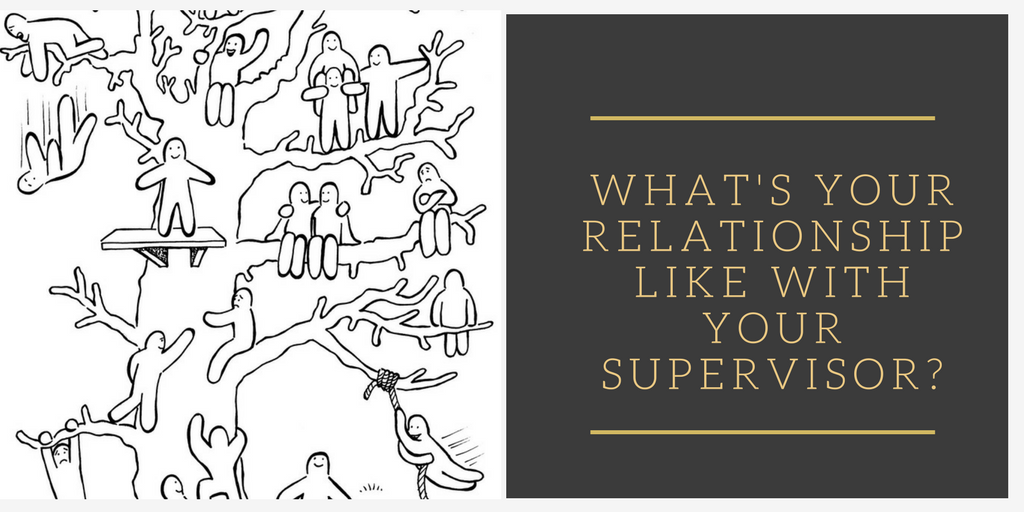
The second trigger is who is delivering the feedback.
Research consistently shows that we filter feedback through our feelings about the person giving it. If we respect and like someone, we tend to receive what they say more openly. If we have a difficult history with them, we tend to discount it, sometimes entirely.
Here’s the uncomfortable truth, though: some of the most valuable feedback we will ever receive comes from people we find difficult. Precisely because they’re not trying to protect our feelings.
A colleague who is always kind may soften the message to the point where it loses its usefulness. Someone who challenges us might deliver it in a way that stings, but the content itself could be exactly what we need to hear.
Next time you notice yourself dismissing feedback because of who it came from, it’s worth pausing and asking: what if I set the relationship aside for a moment and just looked at the content?
I is for Identity
This is the trigger that catches people most off guard, and it’s the one that the TRI model is named for. Put the I in TRY.
We all have core qualities that are central to how we see ourselves.
If I asked your three closest friends to describe you, what would they say?
Perhaps dependable. Creative. Calm under pressure. A natural leader.
These aren’t just traits, they’re part of our identity. And when feedback threatens one of those core qualities, we don’t just disagree with it. We feel it as an attack on who we are.
Here’s a small but very relatable example. Someone who prides themselves on being organized receives feedback that they’ve been dropping the ball on a particular process. Their immediate internal reaction isn’t “let me think about whether that’s true.” It’s “do you have any idea how hard I work to keep things running?” The defensiveness isn’t about the process. It’s about identity.
This trigger is especially powerful because it often operates invisibly. You don’t realize you’re protecting your sense of self. You just know the feedback feels wrong.
Recognizing which of your core identity qualities might be activated in a feedback conversation is one of the most useful things you can do before going in.
So where does this leave us?
The telephone game always gets a laugh because the distortion feels absurd and inevitable. But in the workplace, the cost of that distortion is real. Feedback that doesn’t land means people don’t grow, teams don’t improve, and managers burn out trying to have the same conversations over and over again.
The good news is that, unlike the telephone game, this chain has a fix. When you understand the three triggers, you can start to catch them in real time. You can notice when truth, relationship, or identity is causing the message to drop, and you can make a conscious choice to pick it back up.
The message doesn’t have to get lost. You just have to know how to listen for it.
Take Action Now – go on and learn, laugh, and lead

Learn
- Before your next feedback conversation, ask yourself which of the three TRI triggers you’re most likely to be activated by. Just naming it in advance can significantly reduce its power in the moment.
Laugh
- The telephone game shows how messages get distorted so quickly and easily. We all laughed at it as kids. Then we grew up, went to work, and kept playing it anyway. Check out this adapted version (which I’ve played with groups IRL to huge laughs and recognition).
Lead
- The next time a team member seems to be dismissing feedback, resist the urge to push harder. Instead, get curious. Ask which part isn’t landing. You might be surprised by what’s actually getting in the way.
P.S.
- If the TRI model resonated with you, you’d feel right at home inside the Transformative Trainers Academy. TTA is a global community of subject matter experts who’ve been tasked to teach. I share tips, techniques and tools that I’ve honed in my 40 years of training more than 50,000 people from all over the world. Find out more here and join us!


Leave a Reply